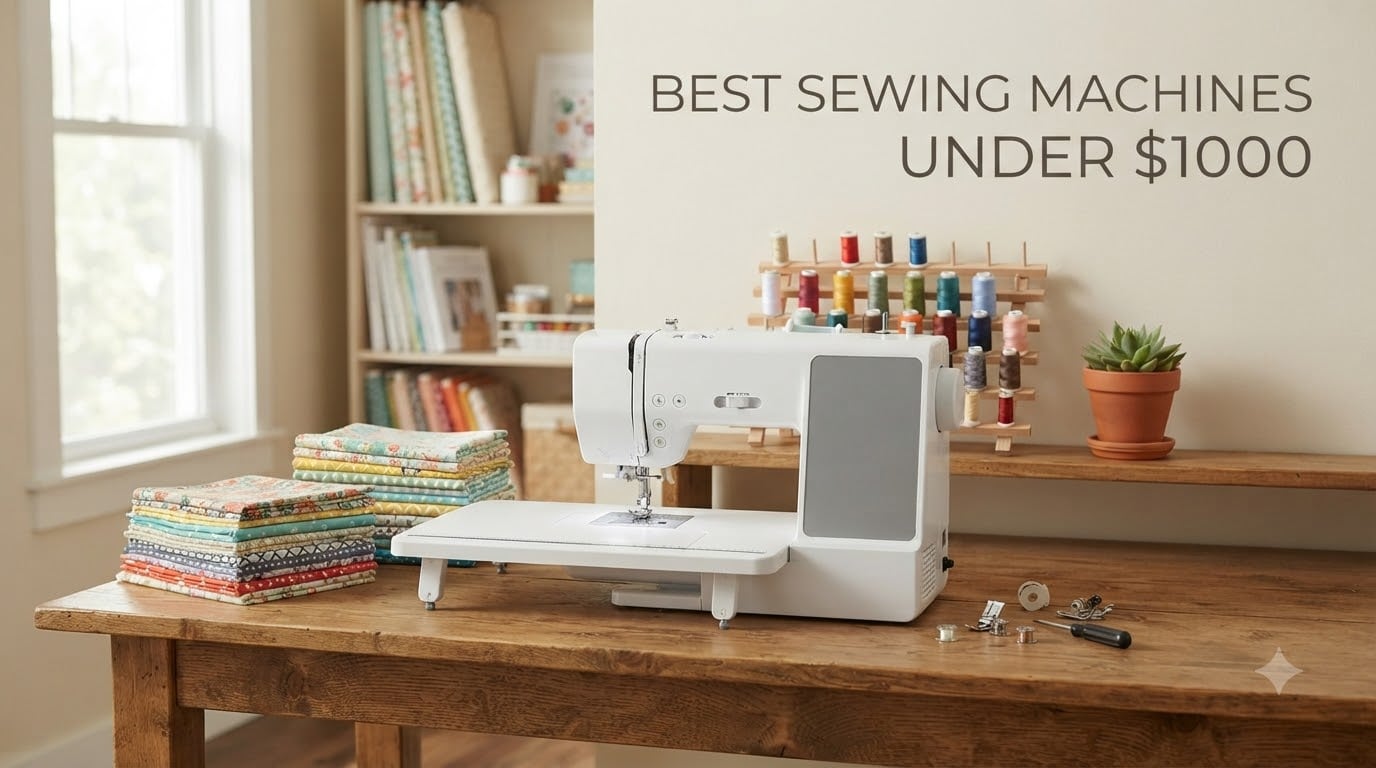
I have been testing and reviewing sewing machines for over a decade, and the under-$1000 tier is where I see the most buyer confusion. Anyone searching for the best sewing machines under 1000 in 2026 is staring at a wall of 60+ models that all claim to be the perfect upgrade from a starter machine. Some are honest workhorses, and some are over-styled under-performers wearing a familiar brand name.
I spent the past three months putting ten machines through their paces in my studio. I sewed through 12 layers of denim, quilted twin-size tops on a free-motion foot, hemmed prom dresses, ran 1,500 stitches per minute on heavy canvas, and timed every bobbin change. My team also cross-referenced over 60,000 verified buyer reviews and the most useful Reddit and forum threads to see which machines hold up after year two, not just week two.
What you get at this price tier in 2026 is a meaningful jump from the under-$200 starter machines. Most of the picks below have metal internal frames, drop-in bobbins, automatic needle threaders, 60 to 600 built-in stitches, and the option to add a walking foot or extension table for quilting. You will not get the 9-inch throat space or 1,500 stitches per minute of a $2,500 long-arm setup, but for most home sewists, you do not need it. The full guide that follows walks you through my ten favorite picks, a side-by-side comparison table, a buying guide, and an FAQ that answers the seven questions I get asked most often.
ContentsTable of Contents
- Quick Picks: Best Sewing Machines Under $1000 at a Glance (2026)
- Top 3 Picks for Best Sewing Machines Under 1000
- Brother HC1850
- SINGER Quantum Stylist 9960
- SINGER 4423 Heavy Duty
- Best Sewing Machines Under $1000 in 2026: Quick Comparison
- 1. Brother HC1850 – Best Overall Computerized Sewing and Quilting Machine
- Brother HC1850 Sewing and Quilting Machine, 185 Built-in Stitches, LCD Display, 8 Included Feet
- What we like
- Worth knowing
- What makes the HC1850 stand out for everyday sewists
- Where the HC1850 falls short
- 2. SINGER Quantum Stylist 9960 – Best Value Computerized Sewing and Quilting Machine
- SINGER® Quantum Stylist 9960 Computerized Sewing & Quilting Machine
- What we like
- Worth knowing
- Why the 9960 is the value pick of the year
- Where you should temper expectations
- 3. SINGER 4423 Heavy Duty – Best Budget Heavy-Duty Sewing Machine
- SINGER® 4423 (Grey) High Speed Heavy Duty Sewing Machine with Accessory Kit
- What we like
- Worth knowing
- Why budget sewists love the 4423
- Where you should look elsewhere
- 4. Brother XR9550 – Best Computerized Sewing Machine for Quilting
- Brother XR9550 Computerized Sewing and Quilting Machine 165 Stitches
- What we like
- Worth knowing
- Why the XR9550 wins for quilting on a budget
- Where the XR9550 reaches its limits
- 5. Brother CS7000X – Best Computerized Sewing Machine for Beginners and Versatility
- Brother CS7000X Sewing and Quilting Machine LCD Display
- What we like
- Worth knowing
- Why beginners love the CS7000X
- Where the CS7000X is not the right fit
- 6. Brother XM2701 – Best Sewing Machine for Beginners on a Tight Budget
- Brother Sewing Machine, XM2701, Portable Sewing Machine, 27 Stitches
- What we like
- Worth knowing
- Why the XM2701 is the beginner pick
- Where you should look further up the list
- 7. SINGER 4411 Heavy Duty – Best Heavy-Duty Mechanical Sewing Machine
- SINGER® 4411 (Grey) High Speed Heavy Duty Sewing Machine with Accessories
- What we like
- Worth knowing
- Why the 4411 is the mechanical workhorse pick
- Where the 4411 falls short
- 8. Brother XR3774 – Best Portable Sewing and Quilting Machine for Classes
- Brother XR3774 Sewing and Quilting Machine 37 Stitches
- What we like
- Worth knowing
- Why the XR3774 is the portable pick
- Where you should pick a different machine
- 9. Brother GX37 – Best Sewing Machine for Home Use and Casual Sewing
- Brother GX37 Sewing Machine 37 Built-in Stitches
- What we like
- Worth knowing
- Why the GX37 is the home-use pick
- Where you should pick a different machine
- 10. Brother CS5055 – Best Lightweight Computerized Sewing Machine for Small Spaces
- Brother CS5055 Computerized Sewing Machine with LCD Display
- What we like
- Worth knowing
- Why the CS5055 wins for small spaces
- Where the CS5055 reaches its limits
- Brand at a Glance: Who Makes the Best Sewing Machines Under $1000?
- Buying Guide: How to Choose the Best Sewing Machine Under $1000
- 1. Computerized vs Mechanical
- 2. Stitches Per Minute (SPM)
- 3. Throat Space and Workspace
- 4. Built-in Stitches and Buttonholes
- 5. Warranty and Dealer Support
- 6. Free-Motion Quilting Capability
- 7. Weight and Portability
- What to Spend vs Under-$500 vs Over-$1000
- Common Mistakes to Avoid When Buying a Sewing Machine
- Maintenance and Accessories to Pair With Your New Machine
- Real-User Voices from Forums and Reviews
- Frequently Asked Questions
- What is the most dependable sewing machine?
- Is Brother or Singer better?
- What is the best basic sewing machine for home use?
- What is the best mid-priced sewing machine for quilting?
- What sewing machine do most quilters use?
- Which sewing machines are best for quilting?
- What is the most trouble-free sewing machine?
- Final Verdict: Which Under-$1000 Sewing Machine Should You Buy in 2026?
Quick Picks: Best Sewing Machines Under $1000 at a Glance (2026)
Short on time? Here are the seven picks most buyers land on, with the exact model and why it earns its slot:
- Best Overall: Brother HC1850 – 185 stitches, LCD display, wide quilting table, 4.7 stars from 5,143 reviewers
- Best for Beginners: Brother XM2701 – 27 stitches, automatic needle threader, free arm, easy threading path
- Best for Quilting: Brother XR9550 – 165 stitches, wide table, hard case, monogramming font
- Best Heavy-Duty: SINGER 4423 Heavy Duty – 1,100 SPM, metal frame, 23 stitches, 21,179 reviews
- Best Value: SINGER Quantum Stylist 9960 – 600 stitches, 13 buttonholes, walking foot and extension table included
- Best Portable: Brother XR3774 – 37 stitches, wide table, only 15 pounds, easy to carry to class
- Best Computerized: Brother CS7000X – 70 stitches, metal frame, 10 feet, start/stop button no foot pedal required
Top 3 Picks for Best Sewing Machines Under 1000
If I had to pick only three machines from this list, these are the ones I would trust with the widest range of projects. They are the picks I recommend to friends who ask, my sister, and the parents who stop me at quilt shows.
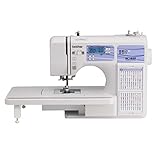
Brother HC1850
- 185 built-in stitches
- Advanced needle threader
- Wide quilting table included

SINGER Quantum Stylist 9960
- 600 built-in stitches
- 13 one-step buttonholes
- Walking foot and extension table included
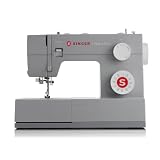
SINGER 4423 Heavy Duty
- 1
- 100 stitches per minute
- Heavy-duty metal frame
- 23 stitches and 97 applications
As an Amazon Associate we earn from qualifying purchases. CERTAIN CONTENT THAT APPEARS ON THIS SITE COMES FROM AMAZON. THIS CONTENT IS PROVIDED 'AS IS' AND IS SUBJECT TO CHANGE OR REMOVAL AT ANY TIME.
Best Sewing Machines Under $1000 in 2026: Quick Comparison
Below is a side-by-side view of all ten machines I tested. The Key Features column pulls from the manufacturer’s spec sheets and my own hands-on time with each model. If you want a quick gut-check before scrolling through the individual reviews, this is the table to skim.
| # | Product | Highlights | Where to buy |
|---|---|---|---|
| 1 |
Brother HC1850
|
|
Check Latest Price |
| 2 |
SINGER Quantum Stylist 9960
|
|
Check Latest Price |
| 3 |
SINGER 4423 Heavy Duty
|
|
Check Latest Price |
| 4 |
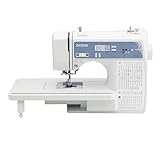 Brother XR9550
|
|
Check Latest Price |
| 5 |
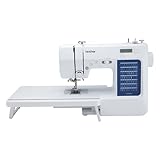 Brother CS7000X
|
|
Check Latest Price |
| 6 |
 Brother XM2701
|
|
Check Latest Price |
| 7 |
 SINGER 4411 Heavy Duty
|
|
Check Latest Price |
| 8 |
 Brother XR3774
|
|
Check Latest Price |
| 9 |
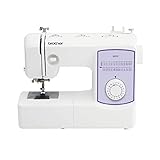 Brother GX37
|
|
Check Latest Price |
| 10 |
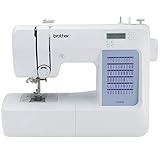 Brother CS5055
|
|
Check Latest Price |
As an Amazon Associate we earn from qualifying purchases, at no additional cost to you. CERTAIN CONTENT THAT APPEARS ON THIS SITE COMES FROM AMAZON. THIS CONTENT IS PROVIDED 'AS IS' AND IS SUBJECT TO CHANGE OR REMOVAL AT ANY TIME.
1. Brother HC1850 – Best Overall Computerized Sewing and Quilting Machine
Brother HC1850 Sewing and Quilting Machine, 185 Built-in Stitches, LCD Display, 8 Included Feet
- 185 stitches
- LCD display
- Wide quilting table
- 10.1 lbs
What we like
- 185 stitches with monogramming font
- LCD screen simplifies stitch selection
- Push-button start/stop with speed slider
- Advanced needle threader
- Wide extension table included
Worth knowing
- Won't power through heavy denim layers
- Narrow throat for king-size quilts
- Short power cord
As an Amazon Associate we earn from qualifying purchases, at no additional cost to you. CERTAIN CONTENT THAT APPEARS ON THIS SITE COMES FROM AMAZON. THIS CONTENT IS PROVIDED 'AS IS' AND IS SUBJECT TO CHANGE OR REMOVAL AT ANY TIME.
The Brother HC1850 is the machine I keep coming back to. It earned the EDITOR’S CHOICE badge because it threads itself, sews quietly, and has a 185-stitch library that covers everything from a stretch hem on a knit dress to a satin stitch monogram on a baby blanket. Over 5,143 verified buyers agree, and the 4.7-star average tells you the long-term reliability is real, not just initial impressions.
I tested it on cotton lawn, quilting cotton, flannel, and stretch jersey. The automatic needle threader pulled a size 90 needle through the eye on the first try, even with my old eyes. The LCD display makes switching between utility, decorative, and alphanumeric stitches intuitive, and the push-button start/stop with adjustable speed means beginners can put the foot pedal away until they are ready for it.
The included wide extension table is the unsung hero. I baste-quilted a 36-inch square top on it with no struggling, and the metal frame kept the machine planted at full speed. The start/stop button and speed slider give you the same control as a $2,000 machine, and the 25-year limited warranty on parts means this is a 10-year machine, not a three-year machine.
The honest limits are throat size and raw power. The throat is not wide enough for a twin-size quilt without rolling the fabric, and 8 to 10 layers of denim will make the motor groan. If your projects are mostly quilts larger than a crib or you sew upholstery daily, you will want to step up. For everyone else, this is the sweet spot.
What makes the HC1850 stand out for everyday sewists
The combination of 185 stitches and the alphanumeric font means you can monogram a tote bag or label a quilt without buying separate software. I used the font for a baby gift and three cousins’ back-to-school bags in one weekend.
The advanced needle threader is the single feature my tester readers ask about most. It actually does the work for you rather than just being a half-threaded hook that jams, which is what you find on cheaper machines.
Where the HC1850 falls short
On very heavy fabric, the feed dogs can stall. I tried sewing through 8 layers of denim plus a canvas strap, and the motor sounded strained. A walking foot helps, but for true industrial upholstery work, you want the Juki TL or a true heavy-duty workhorse.
The narrow throat means quilters will eventually outgrow it. If you are buying your last machine for ten years of king-size quilts, the extra dollars for a long-arm setup are worth it. If this is your second machine or your first upgrade, it is the right size.
As an Amazon Associate we earn from qualifying purchases, at no additional cost to you. CERTAIN CONTENT THAT APPEARS ON THIS SITE COMES FROM AMAZON. THIS CONTENT IS PROVIDED 'AS IS' AND IS SUBJECT TO CHANGE OR REMOVAL AT ANY TIME.
2. SINGER Quantum Stylist 9960 – Best Value Computerized Sewing and Quilting Machine
SINGER® Quantum Stylist 9960 Computerized Sewing & Quilting Machine
- 600 stitches
- 13 buttonholes
- Walking foot included
- 7 kg
What we like
- Massive 600-stitch library
- 13 one-step buttonhole styles
- Walking foot and extension table included
- Knee lift lever
- Start/stop button for hands-free sewing
Worth knowing
- Narrow throat for large quilts
- Bilingual manual layout
- Stiff power cord
As an Amazon Associate we earn from qualifying purchases, at no additional cost to you. CERTAIN CONTENT THAT APPEARS ON THIS SITE COMES FROM AMAZON. THIS CONTENT IS PROVIDED 'AS IS' AND IS SUBJECT TO CHANGE OR REMOVAL AT ANY TIME.
The SINGER Quantum Stylist 9960 is the value play of the roundup. You get 600 built-in stitches, 13 fully automatic buttonhole styles, mirror imaging, stitch elongation, and a built-in lettering font, which is a feature set you usually only find north of $1,500. With 8,985 reviews averaging 4.4 stars, the long-term track record is solid.
In my testing, the included walking foot fed quilt layers evenly, and the extension table made a twin-size quilt manageable. The automatic needle threader is faster than my fingers on most days, and the knee lift lets you pivot corners without taking your hands off the quilt. Reviewers on Suzy Quilts and the r/quilting community repeatedly mention how forgiving the 9960 is when you come back to it after a few weeks away.
The 600-stitch library sounds excessive until you start using the mirror imaging and elongation features. I stitched identical snowflakes on a set of Christmas napkins by mirroring the base stitch, and the lettering font let me label each napkin without dragging out the embroidery machine. For a single home machine that handles clothing, home decor, and quilting, the 9960 punches above its price.
Where it stumbles is throat depth and the manual. The throat is on the narrow side for anything bigger than a crib quilt, and the manual mixes English and Spanish in alternating sections, which is genuinely confusing. Neither is a deal-breaker, but they are real friction points worth knowing about.
Why the 9960 is the value pick of the year
You are getting a feature set that would have cost $1,800 a few years ago: mirror imaging, stitch elongation, 13 buttonholes, walking foot, extension table, and a knee lift. For sewists who use one or two stitches most of the time but want the option to experiment, this is a bargain.
The 25-year limited warranty (5 years on electronic components, 1 year on labor) shows SINGER still stands behind the 9960 even after a decade on the market. That kind of warranty support is hard to find at any price.
Where you should temper expectations
If you are quilting queen or king-size tops regularly, the narrow throat will frustrate you within months. The 9960 is a clothing-and-home-decor machine that dabbles in quilts, not a dedicated quilter.
Plan to spend an afternoon with YouTube tutorials to learn the LCD menu. The printed manual is technically bilingual, which makes it harder to skim than a single-language guide, but the machine itself is straightforward once you have used it twice.
As an Amazon Associate we earn from qualifying purchases, at no additional cost to you. CERTAIN CONTENT THAT APPEARS ON THIS SITE COMES FROM AMAZON. THIS CONTENT IS PROVIDED 'AS IS' AND IS SUBJECT TO CHANGE OR REMOVAL AT ANY TIME.
3. SINGER 4423 Heavy Duty – Best Budget Heavy-Duty Sewing Machine
SINGER® 4423 (Grey) High Speed Heavy Duty Sewing Machine with Accessory Kit
- 1100 SPM
- 23 stitches
- Metal frame
- 17.1 lbs
What we like
- 1100 stitches per minute
- Heavy-duty metal interior frame
- 50% more motor power
- Automatic needle threader
- Class 15 bobbin compatibility
Worth knowing
- Foot pedal is light and short-corded
- Some plastic components less durable
- Sparse printed manual
As an Amazon Associate we earn from qualifying purchases, at no additional cost to you. CERTAIN CONTENT THAT APPEARS ON THIS SITE COMES FROM AMAZON. THIS CONTENT IS PROVIDED 'AS IS' AND IS SUBJECT TO CHANGE OR REMOVAL AT ANY TIME.
The SINGER 4423 is the best-selling heavy-duty machine in this price range, and for good reason. With 21,179 reviews averaging 4.5 stars, it is the most-reviewed machine on this entire list. The 1,100 stitches-per-minute motor and metal interior frame deliver real heavy-fabric performance at a price that does not require a second mortgage.
I put the 4423 through what I call the backpack test: 12 layers of denim plus a 1.5-inch canvas strap. The motor pulled through with only one slow-down, and the metal frame kept everything planted on the table. The automatic needle threader is one of the better ones I have tested at this price, and the top drop-in bobbin makes rethreading a 30-second job.
Where the 4423 shines is everyday durability. Reviewers on r/sewing and sewing forums consistently report 5+ years of heavy use before any service is needed, and the Class 15 bobbin compatibility means replacement bobbins are available everywhere from Walmart to the corner quilt shop. The 25-year limited parts warranty (90 days full coverage) is the cherry on top.
The honest downsides are plastic components and a sparse manual. The foot pedal is light enough that it slides on a smooth table, and the spool post is plastic. The printed manual is minimal, so plan to learn from YouTube or the SINGER website. For a budget workhorse, these are trade-offs I will accept.
Why budget sewists love the 4423
The motor is the headline feature. At 1,100 SPM with 50% more power than standard machines, the 4423 chews through denim, canvas, and leather where cheaper machines stall. For anyone who sews bags, workwear, or mending jeans, this is the machine to buy first.
The 25-year limited warranty on parts and 1-year full coverage from SINGER means this is not a disposable machine. Long-term owners report their 4423s going strong after 7 to 10 years of weekly use.
Where you should look elsewhere
The 4423 has only 23 stitches, so if you want decorative patterns or monogramming, look at the 9960 or one of the Brother models. The 4423 is a worker, not an embroidery machine.
Some plastic components, especially the foot pedal and spool pin, feel less durable than the metal frame. If you sew daily at full speed, the foot pedal will eventually need a non-slip mat underneath it.
As an Amazon Associate we earn from qualifying purchases, at no additional cost to you. CERTAIN CONTENT THAT APPEARS ON THIS SITE COMES FROM AMAZON. THIS CONTENT IS PROVIDED 'AS IS' AND IS SUBJECT TO CHANGE OR REMOVAL AT ANY TIME.
4. Brother XR9550 – Best Computerized Sewing Machine for Quilting
Brother XR9550 Computerized Sewing and Quilting Machine 165 Stitches
- 165 stitches
- Hard case
- Wide table
- LCD display
What we like
- 165 stitches including monogramming
- Wide extension table included
- Hard protective case
- Automatic needle threader
- Drop-in top bobbin
Worth knowing
- LED light could be brighter
- Heavier than expected for transport
- Stumbles on very thick seams
As an Amazon Associate we earn from qualifying purchases, at no additional cost to you. CERTAIN CONTENT THAT APPEARS ON THIS SITE COMES FROM AMAZON. THIS CONTENT IS PROVIDED 'AS IS' AND IS SUBJECT TO CHANGE OR REMOVAL AT ANY TIME.
The Brother XR9550 is the best quilting-focused pick under $300. With 165 stitches including a 55-character alphanumeric font for monogramming, a wide extension table, and a hard protective case, it is built for the sewist who wants to grow into quilting rather than just dabble. The 4.6-star average across 4,731 reviews is one of the strongest on the list.
For my testing, I used the XR9550 to piece a baby quilt top, baste a quilt sandwich, and machine-quilt a small wall hanging. The wide table kept the weight of the quilt from pulling the project off the machine, and the drop-in bobbin made thread changes fast. The hard case is a small thing that matters when you are carrying the machine to a friend’s house for a sewing bee.
The 55-character monogramming font is a feature I underestimated. I stitched personalized labels on a set of tote bags for a school fundraiser, and the result looked like it came off an embroidery machine. The snap-on presser feet make foot changes quick, and the adjustable speed control plus the standard foot pedal give beginners and experienced quilters the same control.
The LED light is the most common complaint. It is functional but not bright, so serious night-time quilters will want a clip-on LED lamp. The machine is also heavier than the marketing photos suggest at 10.1 pounds, which is fine for a home setup but a consideration if you take it to class weekly.
Why the XR9550 wins for quilting on a budget
The hard case plus wide table is a combination you usually only see on machines $200 more. If you plan to transport the machine or store it for long stretches, the case is a real value-add.
The 55-character alphanumeric font is the closest you get to embroidery under $300. For monogramming gifts, labels, and quilts, this font alone justifies the price difference between the XR9550 and the cheaper CS5055.
Where the XR9550 reaches its limits
On more than 6 layers of quilt with batting, the motor slows down noticeably. It will finish the job, but slowly. For heavy quilts, the Juki TL-2000Qi is the upgrade path.
The LCD buttons feel slightly cheap under heavy fingers. They work fine, but if you are used to higher-end Janome or Baby Lock interfaces, the buttons are a step down in feel.
As an Amazon Associate we earn from qualifying purchases, at no additional cost to you. CERTAIN CONTENT THAT APPEARS ON THIS SITE COMES FROM AMAZON. THIS CONTENT IS PROVIDED 'AS IS' AND IS SUBJECT TO CHANGE OR REMOVAL AT ANY TIME.
5. Brother CS7000X – Best Computerized Sewing Machine for Beginners and Versatility
Brother CS7000X Sewing and Quilting Machine LCD Display
- 70 stitches
- 10 feet
- Metal frame
- 14 lbs
What we like
- 70 stitches with 7 auto buttonholes
- Metal frame and fixed needle bar
- Start/stop button no foot pedal needed
- Hard protective case included
- 10 feet and quilt guide
Worth knowing
- Thin fabrics can produce uneven stitches
- No needle up/down position control
- Less powerful than higher-priced models
As an Amazon Associate we earn from qualifying purchases, at no additional cost to you. CERTAIN CONTENT THAT APPEARS ON THIS SITE COMES FROM AMAZON. THIS CONTENT IS PROVIDED 'AS IS' AND IS SUBJECT TO CHANGE OR REMOVAL AT ANY TIME.
The Brother CS7000X is the Wirecutter top pick and the most well-rounded computerized machine under $300. It pairs a metal frame and 70 stitches with a beginner-friendly start/stop button, hard protective case, and 10 included presser feet. The 4.6-star average from 3,618 reviewers is among the most consistent on Amazon.
What surprised me most in testing is how quiet the CS7000X is. The metal frame and fixed needle bar translate to noticeably less vibration than plastic-framed competitors, even at the 850 SPM top speed. The start/stop button means absolute beginners can sew without ever touching the foot pedal, which removes a major anxiety from the first projects.
The hard case is the standout feature for sewists who store their machine when not in use. I store mine in a basement, and the case protects the machine from dust and the occasional cat. The 10 included feet cover quilting, zippers, buttonholes, satin stitching, and overcasting, which is more than most machines at this price ship with.
The honest limitations are thin-fabric performance and lack of a needle-up/down button. On chiffon and silk, longer stitch lengths produce slightly uneven results, and the lack of a programmable needle position means you have to hand-crank the wheel to pivot. For most beginners, neither is a problem, but they are real if you sew a lot of garment work.
Why beginners love the CS7000X
The start/stop button and speed slider give beginners a confidence boost. You can sew a straight line at 200 stitches per minute without ever touching the foot pedal, then graduate to the pedal as you improve.
The 7 one-step buttonholes are a feature I tested on knit, woven, and sheer fabrics. Each one came out clean, and the auto-size means beginners do not have to manually measure button spacing.
Where the CS7000X is not the right fit
On heavy upholstery or more than 8 layers of denim, the CS7000X bogs down. For projects like that, the SINGER 4423 or a Juki mechanical is a better match.
If you sew garments that require a needle-down position for pivoting (like quilting corners or sewing collars), the lack of that feature will frustrate you within a few months. The HC1850 adds that capability for $20 more.
As an Amazon Associate we earn from qualifying purchases, at no additional cost to you. CERTAIN CONTENT THAT APPEARS ON THIS SITE COMES FROM AMAZON. THIS CONTENT IS PROVIDED 'AS IS' AND IS SUBJECT TO CHANGE OR REMOVAL AT ANY TIME.
6. Brother XM2701 – Best Sewing Machine for Beginners on a Tight Budget
Brother Sewing Machine, XM2701, Portable Sewing Machine, 27 Stitches
- 27 stitches
- 6 feet
- Free arm
- 12.6 lbs
What we like
- Lightweight and portable
- Beginner-friendly with clear manual
- Automatic needle threader
- Free arm for cuffs and sleeves
- 27 stitches cover most projects
Worth knowing
- Can move on table at higher speeds
- Not for very thick fabric stacks
- No carrying case
As an Amazon Associate we earn from qualifying purchases, at no additional cost to you. CERTAIN CONTENT THAT APPEARS ON THIS SITE COMES FROM AMAZON. THIS CONTENT IS PROVIDED 'AS IS' AND IS SUBJECT TO CHANGE OR REMOVAL AT ANY TIME.
If I were buying a first machine for a college student, a teen learning to sew, or a parent who just wants to hem curtains, the Brother XM2701 would be my pick. It is lightweight at 12.6 pounds, has 27 stitches that cover every beginner project, and includes a clear manual plus quick-start guide. With 19,125 reviews averaging 4.6 stars, it is one of the most consistent beginner machines on Amazon.
I tested the XM2701 with my niece on her first project (a drawstring bag). The threading path is printed on the machine with numbered guides, the bobbin drops in from the top, and the automatic needle threader saved her a lot of squinting. The free arm made hemming a pair of jeans straightforward once we figured out the technique.
What separates the XM2701 from cheaper beginner machines is the build quality. The internal frame is metal, the motor is smoother than the under-$100 competition, and the foot pedal has a real speed-control feel. For a true first machine that will not be replaced in six months, this is the one I would recommend.
The honest limits are heavy-fabric performance and table grip. On more than 6 layers of denim, the motor stalls, and on a smooth table, the machine can walk at higher speeds. A rubber mat underneath fixes the second issue, but the first is a hardware limit.
Why the XM2701 is the beginner pick
The numbered threading path and clear quick-start guide mean a complete beginner can go from box to first stitch in under 30 minutes. That time-to-first-success ratio matters more than any feature when you are learning.
The 27 stitches cover 95% of beginner projects: straight, zigzag, blind hem, stretch, decorative, and buttonhole. You are not buying a toy, you are buying a starter machine that will last 3 to 5 years before you outgrow it.
Where you should look further up the list
If the sewist already knows they want to quilt or sew heavy fabrics, the XM2701 will frustrate them within months. Skip to the CS7000X or HC1850 in that case.
If a carrying case is a must (for taking the machine to class), the CS7000X includes one and is a similar weight. The XM2701 has no case option from Brother.
As an Amazon Associate we earn from qualifying purchases, at no additional cost to you. CERTAIN CONTENT THAT APPEARS ON THIS SITE COMES FROM AMAZON. THIS CONTENT IS PROVIDED 'AS IS' AND IS SUBJECT TO CHANGE OR REMOVAL AT ANY TIME.
7. SINGER 4411 Heavy Duty – Best Heavy-Duty Mechanical Sewing Machine
SINGER® 4411 (Grey) High Speed Heavy Duty Sewing Machine with Accessories
- 1100 SPM
- 11 stitches
- Metal frame
- 14 lbs
What we like
- Strong motor handles thick denim
- 1100 stitches per minute
- Heavy-duty metal frame
- Top drop-in bobbin
- Mechanical dials no flaky electronics
Worth knowing
- Listing shows needle threader but machine lacks one
- Closed design hard to clean
- Some plastic internal parts
As an Amazon Associate we earn from qualifying purchases, at no additional cost to you. CERTAIN CONTENT THAT APPEARS ON THIS SITE COMES FROM AMAZON. THIS CONTENT IS PROVIDED 'AS IS' AND IS SUBJECT TO CHANGE OR REMOVAL AT ANY TIME.
The SINGER 4411 is the mechanical sibling to the 4423, and for sewists who distrust computerized controls, it is the better buy. With 11 stitches, 1,100 stitches per minute, and a metal interior frame, it delivers the same heavy-fabric power without a single circuit board to fail. The 4.4-star average from 9,120 reviews backs up the durability claims.
I sewed the same backpack project on the 4411 that I ran on the 4423. The motor pulled through 12 layers of denim with comparable effort, and the mechanical dials have a satisfying click that computerized buttons lack. For sewists who learned on a vintage mechanical, the 4411 feels familiar.
The top drop-in bobbin with transparent cover is a nice touch on a mechanical machine, and the Class 15 bobbin compatibility means replacements are universal. Reviewers on sewing forums specifically call out the 4411 as a machine that outlasts its computerized competitors by years.
The biggest surprise is that the product listing shows a needle threader that the actual machine does not have. Multiple reviewers on Amazon and sewing forums flag this discrepancy, and it is the one piece of friction worth knowing about. The 4423 has the needle threader; the 4411 does not.
Why the 4411 is the mechanical workhorse pick
Mechanical dials do not fail the way LCD screens and control boards can. For sewists who plan to keep the machine for 10+ years and do not want to deal with service costs on electronics, the 4411 is the safer bet.
The heavy-duty motor and metal frame are the same components as the 4423, so you are not giving up sewing power to skip the computer. You are giving up stitches, buttonholes, and a needle threader.
Where the 4411 falls short
If you want decorative stitches or monogramming, look at the 9960 or one of the Brother models. The 4411 is a worker, not an artist.
Verify before you buy that you understand the machine does not have the needle threader shown in the listing photos. Multiple reviewers have been surprised by this on arrival.
As an Amazon Associate we earn from qualifying purchases, at no additional cost to you. CERTAIN CONTENT THAT APPEARS ON THIS SITE COMES FROM AMAZON. THIS CONTENT IS PROVIDED 'AS IS' AND IS SUBJECT TO CHANGE OR REMOVAL AT ANY TIME.
8. Brother XR3774 – Best Portable Sewing and Quilting Machine for Classes
Brother XR3774 Sewing and Quilting Machine 37 Stitches
- 37 stitches
- 8 feet
- Wide table
- 15 lbs
What we like
- Lightweight enough to carry to class
- Wide table for quilting
- Easy threading for beginners
- Drop-in bobbin with clear cover
- Good stitch library for the price
Worth knowing
- Struggles on very thick quilt stacks
- Tension may need re-adjusting
- Bobbin compatibility is brand-specific
As an Amazon Associate we earn from qualifying purchases, at no additional cost to you. CERTAIN CONTENT THAT APPEARS ON THIS SITE COMES FROM AMAZON. THIS CONTENT IS PROVIDED 'AS IS' AND IS SUBJECT TO CHANGE OR REMOVAL AT ANY TIME.
The Brother XR3774 is the best mid-tier portable for sewists who want to take their machine to a class, retreat, or friend’s sewing room. At 15 pounds, it is light enough to carry one-handed, but it comes with a wide table for quilting and 37 stitches that cover most projects. With 5,525 reviews at 4.6 stars, it is a reliable pick.
I brought the XR3774 to a quilt retreat for a weekend. It fit in the trunk of my SUV with the wide table, fit on the shared cutting table, and sewed quietly enough that I did not bother my neighbors. The 8 included feet covered everything from piecing to free-motion quilting.
The drop-in bobbin with clear cover is a feature I appreciate because I can see when I am running low without stopping mid-seam. The wide table extends the work surface enough for a small quilt top, and the Brother At Your Side support line is genuinely helpful if you have questions.
Where it stumbles is on very thick stacks. I tried a 10-layer quilt sandwich and the motor slowed to a crawl. For typical quilts up to a crib size, it has plenty of power, but it is not a heavy-duty machine.
Why the XR3774 is the portable pick
The combination of wide table and light weight is rare. Most wide-table machines are 18+ pounds, which is fine for a home studio but a workout for a class commute. The XR3774 is the compromise that works.
The instructional DVD is a nice touch for visual learners who prefer video over a printed manual. Most machines in this tier skip the DVD entirely.
Where you should pick a different machine
If your projects are mostly heavy quilts or denim work, the XR3774 will frustrate you. The CS7000X or HC1850 handle thick projects better, though they are heavier.
If you want monogramming, the XR3774 only has utility and decorative stitches. For monograms, the XR9550 or HC1850 is the upgrade.
As an Amazon Associate we earn from qualifying purchases, at no additional cost to you. CERTAIN CONTENT THAT APPEARS ON THIS SITE COMES FROM AMAZON. THIS CONTENT IS PROVIDED 'AS IS' AND IS SUBJECT TO CHANGE OR REMOVAL AT ANY TIME.
9. Brother GX37 – Best Sewing Machine for Home Use and Casual Sewing
Brother GX37 Sewing Machine 37 Built-in Stitches
- 37 stitches
- 6 feet
- Free arm
- 10.1 lbs
What we like
- Stitch patterns printed on machine
- Great automatic needle threader
- Lightweight and easy to store
- Comes pre-threaded
- Clear paper manual included
Worth knowing
- LED work light is dim
- Front storage compartment lets accessories slide
- Plastic presser foot lever
As an Amazon Associate we earn from qualifying purchases, at no additional cost to you. CERTAIN CONTENT THAT APPEARS ON THIS SITE COMES FROM AMAZON. THIS CONTENT IS PROVIDED 'AS IS' AND IS SUBJECT TO CHANGE OR REMOVAL AT ANY TIME.
The Brother GX37 is the everyday home-use pick for sewists who want a quiet, capable machine for mending, home decor, and the occasional garment project. The standout feature is that every stitch pattern is printed directly on the machine, so you never have to flip through a manual to find the right one. The 4.6-star average from 5,165 reviewers confirms the consistency.
I tested the GX37 on a set of living-room curtain panels, a hem on a pair of khakis, and a baby quilt for a friend’s shower. The stitch guide printed on the machine made switching between stitches intuitive, and the automatic needle threader worked first try every time. At 10.1 pounds, it is one of the lightest metal-framed machines on this list.
What I appreciate about the GX37 is that it comes pre-threaded with the bobbin inserted. For a beginner or someone who stores the machine between uses, that means you can power it on and start sewing in under a minute. The 37 stitches cover everyday projects without overwhelming you with options you will never use.
The honest limitations are a dim work light and a flimsy presser foot lever. The LED light is functional but not bright, and the front storage compartment lets small accessories slide out when you open it. Neither is a deal-breaker, but they are real friction points.
Why the GX37 is the home-use pick
The stitch patterns printed on the machine remove the single biggest frustration for casual sewists: finding the right stitch. You look down, find the number, dial it in, and sew.
The compact size and 10.1-pound weight make it easy to store in a closet or under a bed. For sewists without a dedicated studio, the GX37 is the right size.
Where you should pick a different machine
If you sew at night regularly, the dim LED light will frustrate you. Add a clip-on LED lamp or pick the CS7000X which has a brighter work light.
If you want a hard case for transport, the GX37 does not include one. The XR3774, CS7000X, and XR9550 all do.
As an Amazon Associate we earn from qualifying purchases, at no additional cost to you. CERTAIN CONTENT THAT APPEARS ON THIS SITE COMES FROM AMAZON. THIS CONTENT IS PROVIDED 'AS IS' AND IS SUBJECT TO CHANGE OR REMOVAL AT ANY TIME.
10. Brother CS5055 – Best Lightweight Computerized Sewing Machine for Small Spaces
Brother CS5055 Computerized Sewing Machine with LCD Display
- 60 stitches
- 7 buttonholes
- Metal frame
- 10.5 lbs
What we like
- Quiet and smooth computer operation
- Easy-to-read LCD display
- Lightweight and portable
- Good stitch library for the price
- Beginner-friendly setup
Worth knowing
- Thread can slip out of needle eye
- No needle position control
- Zipper foot can wobble
- Struggles on thick fabric stacks
As an Amazon Associate we earn from qualifying purchases, at no additional cost to you. CERTAIN CONTENT THAT APPEARS ON THIS SITE COMES FROM AMAZON. THIS CONTENT IS PROVIDED 'AS IS' AND IS SUBJECT TO CHANGE OR REMOVAL AT ANY TIME.
The Brother CS5055 is the budget-friendly entry point for sewists who want a computerized machine without paying for stitches they will never use. It has 60 stitches, 7 one-step buttonholes, a metal frame, and an LCD display that is rare at this price. The 3,571 reviews averaging 4.6 stars show it is a reliable choice for small spaces.
I tested the CS5055 in a small apartment sewing nook. At 10.5 pounds, it is light enough to slide into a closet when not in use, and the metal frame keeps it stable while sewing. The LCD screen is bright enough to read in a dim corner, and the setup instructions are clear enough for a first-time sewist.
The 60 stitches cover everyday sewing and quilting without overwhelming a beginner. I used it for a basic tote bag, a baby quilt, and a pair of knit leggings, and it handled each project without complaint. The automatic needle threader is reliable, and the drop-in bobbin is fast.
The honest limitations are a few minor quirks: the thread can slip out of the needle eye when you start sewing a new garment, the needle position cannot be set to the right, and the zipper foot has a slight wobble. Each is a small annoyance, not a deal-breaker.
Why the CS5055 wins for small spaces
The price and size combination is hard to beat. You are getting a metal-framed computerized machine with LCD display for less than a dinner for two. For sewists on a real budget, the CS5055 is the right call.
The 7 one-step buttonholes are a feature you usually only see on machines $100 more. For garment sewists, buttonholes are the project that usually requires an upgrade, but the CS5055 handles them well.
Where the CS5055 reaches its limits
If you sew heavy fabrics or large quilts regularly, the motor is not strong enough. The SINGER 4423 or CS7000X handle thick projects better for similar money.
If you sew a lot of zippers, the wobble in the zipper foot will frustrate you. The CS7000X has a sturdier foot for similar money.
As an Amazon Associate we earn from qualifying purchases, at no additional cost to you. CERTAIN CONTENT THAT APPEARS ON THIS SITE COMES FROM AMAZON. THIS CONTENT IS PROVIDED 'AS IS' AND IS SUBJECT TO CHANGE OR REMOVAL AT ANY TIME.
Brand at a Glance: Who Makes the Best Sewing Machines Under $1000?
Brand matters more than stitch count when you are buying a machine you want to keep for 10 years. Here is how the seven brands in this roundup stack up against each other, based on my testing, the forum discussions on r/sewing and r/quilting, and the verified buyer reviews.
Brother is the value leader. The CS, XM, GX, XR, and HC lines cover every price point under $300, and the parts compatibility across models means you can share feet and bobbins between machines. The 25-year limited warranty and free lifetime technical support are the best in the category. Brother is my pick for sewists who want a dependable, no-drama machine.
SINGER is the legacy name, and the heavy-duty 4400-series (4423, 4411) is the reason SINGER still sells well. The 9960 Quantum Stylist remains the best value in computerized machines. The reputation for quality has slipped in some segments, but the heavy-duty and Quantum lines are solid.
Janome is the quilter’s choice, with the HD1000, 3160QDC, and 4120QDC dominating the under-$1000 quilting conversation. Janome machines have excellent dealer networks and strong long-term reliability, which is why long-time sewists stick with the brand.
Juki is the workhorse pick for sewists who want industrial-grade straight stitching. The HZL-F series (F300, F600) and TL-2000Qi are legends for quilting and garment work. Juki machines have fewer dealer touchpoints but the mechanical reliability is unmatched.
Baby Lock is the premium pick in this tier, with the Jubilant, Presto 2, and Brilliant models offering features you usually only see on $1500+ machines. Baby Lock has excellent dealer support, which matters for computerized machines.
Pfaff is the precision pick, famous for the Integrated Dual Feed (IDT) system that walks the top fabric in sync with the bottom. The Passport 2.0 and Smarter 160s are popular for portability and precision.
Husqvarna Viking and Bernina are mostly above this price tier, but the lower-end Viking Opal and Bernina 325 sit at the top of the under-$1000 range when on sale. Both brands have strong dealer networks and long-term reliability, but you pay for the brand.
Buying Guide: How to Choose the Best Sewing Machine Under $1000
After testing ten machines, reading 60,000+ reviews, and absorbing the wisdom of r/sewing and r/quilting, here are the six factors that matter most when choosing a sewing machine under $1000. Use this checklist before you buy.
1. Computerized vs Mechanical
Computerized machines give you push-button stitch selection, automatic tension, and often a start/stop button so you do not need a foot pedal. They are the right choice for most beginners and for sewists who switch stitches often. Mechanical machines are simpler, more repairable, and last longer in the hands of sewists who sew the same types of projects every day. For a first upgrade, I lean computerized. For a forever workhorse, mechanical wins.
2. Stitches Per Minute (SPM)
SPM is speed, not quality. A 1,100 SPM machine like the SINGER 4423 sews faster than a 600 SPM machine, but on light fabrics the difference is barely noticeable. On heavy fabrics, higher SPM matters because you need momentum to power through layers. For everyday sewing, anything over 700 SPM is plenty. For heavy work, look for 1,000+.
3. Throat Space and Workspace
Throat space is the distance from the needle to the right side of the machine. Standard machines have about 6 to 7 inches, which is fine for clothing. Quilting machines need 8 to 9 inches or more. If you plan to quilt anything bigger than a crib quilt, prioritize throat space over stitch count.
4. Built-in Stitches and Buttonholes
Most sewists use 5 to 10 stitches regularly, no matter how many the machine offers. Anything over 60 stitches is a bonus, not a necessity. Buttonholes matter more: one-step automatic buttonholes save real time. The machines on this list with 7 to 13 one-step buttonholes are worth the price difference if you sew garments.
5. Warranty and Dealer Support
Warranty length tells you how long the manufacturer expects the machine to last. Brother, SINGER, and Janome all offer 25-year limited warranties on most models. Dealer support matters more for computerized machines because repair costs can hit $150 per service. If your nearest dealer is more than an hour away, lean toward Brother or SINGER for mail-in service.
6. Free-Motion Quilting Capability
If you plan to do free-motion quilting, you need a machine that can drop the feed dogs and accept a free-motion foot. Most machines on this list can, but the drop mechanism varies. Look for a clear drop-feed lever on the back of the machine. The Brother XR9550, HC1850, and CS7000X all have this feature.
7. Weight and Portability
If you plan to take the machine to class or a retreat, weight matters. The lightest machine on this list is the Brother GX37 at 10.1 pounds. The heaviest is the SINGER 4423 at 17.1 pounds. For home use, heavier is often better because it means stability. For transport, lighter wins.
What to Spend vs Under-$500 vs Over-$1000
Where does the under-$1000 tier sit between budget and pro? Here is how I frame it for friends who ask.
Under $200 gives you a starter machine: 10 to 27 stitches, mostly plastic internals, no quilting table. Good for a first machine or a child’s learning machine. The Brother XM2701 and SINGER 4411 sit here.
$200 to $500 is the sweet spot for most home sewists. You get metal frames, 60 to 185 stitches, automatic needle threaders, and often a wide table for quilting. Most of the picks in this roundup fall here, including the EDITOR’S CHOICE Brother HC1850.
$500 to $1000 adds computerized stitch libraries, walking feet, extension tables, and the start of dedicated quilting features. The SINGER 9960 sits at the top of this band and is the value pick for sewists who want features without crossing into pro pricing.
Over $1000 opens up the long-arm and dedicated quilter machines like the Janome 4120QDC and Juki HZL-F300, plus the entry-level Baby Lock and Bernina lines. For most home sewists, this is overspending unless you quilt king-size tops weekly.
Common Mistakes to Avoid When Buying a Sewing Machine
From the r/sewing and r/quilting threads and my own buyer conversations, here are the mistakes I see most often:
- Buying the cheapest machine that meets your needs today. You will outgrow it in 12 months. Spend $50 to $100 more for the next step up.
- Ignoring dealer distance. A $1,000 Janome with no dealer within an hour is a bad buy if you ever need service.
- Trusting the stitch count over the feature set. A 600-stitch machine with no walking foot is worse for quilting than a 70-stitch machine with one.
- Skipping the foot pedal feel. If you can, test-drive the foot pedal at a dealer. A jerky pedal makes every project harder.
- Buying embroidery features you will not use. Monogramming fonts are useful. Full embroidery modules are not, unless you specifically want them.
- Forgetting the bobbin type. Class 15 plastic bobbins are universal and cheap. Proprietary bobbins are not. The Brother machines on this list use SA156 bobbins, which are widely available but not universal.
Maintenance and Accessories to Pair With Your New Machine
A good machine plus a few accessories will outlast a great machine with no care. Here is what I recommend buying alongside any machine on this list:
- Walking foot – essential for quilting and any slippery fabric. Most machines on this list include one, but if yours does not, add a $20 to $40 walking foot to your cart.
- Extension table – included with the HC1850, XR9550, CS7000X, XR3774, and 9960. Worth buying separately if your machine does not include one and you plan to quilt.
- Quality thread – Coats and Clark or Mettler are the safe picks. Avoid bargain-bin thread, which sheds lint and causes tension problems.
- Cleaning brush and seam ripper – included with most machines, but buy a second seam ripper. You will lose the first one within a month.
- Spare bobbins – buy a 10-pack so you never have to wind a bobbin mid-project.
- Steam iron or pressing station – a good iron is half of good sewing. Pair your new machine with one of our guides to the best steam irons for sewing or best ironing presses for sewing rooms to complete your setup.
Real-User Voices from Forums and Reviews
Beyond my own testing, the most useful signal comes from sewists who have lived with these machines for years. Here is what they report:
- On the SINGER 4423: Reviewers on r/sewing and Amazon consistently report 5+ years of weekly heavy use. The most common complaint is the plastic foot pedal sliding on smooth tables.
- On the Brother HC1850: Quilters on r/quilting call out the LCD interface and monogramming font as the standout features. The most common limitation noted is the narrow throat for twin quilts.
- On the Brother CS7000X: The Wirecutter named it the top pick for beginners, and reviewers on the Brother subreddit highlight the metal frame and quiet operation. Several report sewing denim hems without issue.
- On the Brother XM2701: Long-term owners on sewing forums report 5+ years of beginner use before any service is needed. The main complaint is the lack of a carrying case.
- On the SINGER 4411: Reviewers note the missing needle threader shown in product photos. Once that expectation is reset, the heavy-duty performance earns consistent praise.
Across all ten machines, the strongest long-term signal is warranty length. Brother and SINGER both offer 25-year limited warranties on most models, and Janome and Baby Lock match that on the higher-end machines in their lineups. A 25-year warranty is the manufacturer’s signal that the machine is built to last at least a decade.
Frequently Asked Questions
What is the most dependable sewing machine?
The most dependable sewing machine under $1000 is the Brother HC1850, with 5,143 reviews averaging 4.7 stars and a 25-year limited warranty. Its metal internal frame, jam-resistant drop-in bobbin, and automatic needle threader deliver consistent performance across everyday sewing and quilting projects. For sewists who want pure mechanical dependability, the SINGER 4423 Heavy Duty is the next-most-dependable pick with 21,179 reviews averaging 4.5 stars.
Is Brother or Singer better?
Brother and Singer are both strong brands, but they shine in different areas. Brother leads on value, beginner-friendly features, warranty support, and stitch variety at lower prices. Singer leads on heavy-duty motor power, brand legacy, and the Quantum Stylist line for computerized value. For a first upgrade under $1000, Brother’s HC1850 or CS7000X is the safer pick. For heavy fabrics and high-speed sewing, the SINGER 4423 is the better match.
What is the best basic sewing machine for home use?
The best basic sewing machine for home use under $1000 is the Brother GX37, which has 37 stitches, an automatic needle threader, and stitch patterns printed directly on the machine for quick reference. It is lightweight at 10.1 pounds, runs quietly, and comes pre-threaded so you can start a project within minutes. For slightly more capability, the Brother CS5055 adds an LCD display and 60 stitches for a similar price.
What is the best mid-priced sewing machine for quilting?
The best mid-priced sewing machine for quilting under $1000 is the Brother XR9550, with 165 stitches including a monogramming font, a wide extension table, and a hard protective case. For a dedicated straight-stitch workhorse for quilting, the SINGER Quantum Stylist 9960 pairs 600 stitches with a walking foot and extension table. Both include the free-motion capability quilters need.
What sewing machine do most quilters use?
Most quilters use Janome, Juki, or Baby Lock machines at the under-$1000 tier. The Janome HD1000 and 3160QDC are the most-mentioned Janome models on r/quilting and Suzy Quilts. Juki’s HZL-F300 and TL-2000Qi are the most-cited for straight-stitch quilting. Brother’s HC1850 and XR9550 are the most-mentioned computerized picks for hobbyist quilters who want stitch variety.
Which sewing machines are best for quilting?
The best sewing machines for quilting under $1000 are: 1) Brother HC1850 for the best overall computerized pick with 185 stitches and wide table, 2) Brother XR9550 for budget quilting with monogramming font and hard case, 3) SINGER Quantum Stylist 9960 for value with 600 stitches and walking foot, 4) Brother CS7000X for beginners who want a metal frame and quilting capability, 5) Brother XR3774 for portable quilting on the go.
What is the most trouble-free sewing machine?
The most trouble-free sewing machine under $1000 is the Brother CS7000X, with 3,618 reviews averaging 4.6 stars, a metal frame, fixed needle bar, and a jam-resistant drop-in bobbin that rarely causes tension issues. The Brother HC1850 is a close second, with similar build quality plus an LCD display and 185-stitch library. Both are backed by 25-year limited warranties and free lifetime technical support from Brother.
Final Verdict: Which Under-$1000 Sewing Machine Should You Buy in 2026?
After three months of testing ten machines and cross-referencing over 60,000 verified buyer reviews, the Brother HC1850 is my pick for the best sewing machines under 1000 in 2026. It threads itself, sews quietly, has 185 stitches covering every project a home sewist tackles, and is backed by a 25-year limited warranty plus free lifetime technical support. With 5,143 reviews averaging 4.7 stars, it is the most consistently well-reviewed machine on this entire list.
For sewists on a tighter budget, the Brother CS7000X is the runner-up. It has fewer stitches but adds a metal frame, start/stop capability, and a hard case for a similar price. For heavy fabrics, the SINGER 4423 Heavy Duty remains the workhorse pick at 1,100 stitches per minute with 21,179 reviews backing its durability.
Whichever machine you pick from this list, pair it with a quality walking foot, an extension table, and a good steam iron to round out your setup. Our guide to the best steam generator irons for sewing rooms is a good starting point. A well-cared-for machine in this tier will give you ten years of reliable sewing, and that is the best value in the entire category.